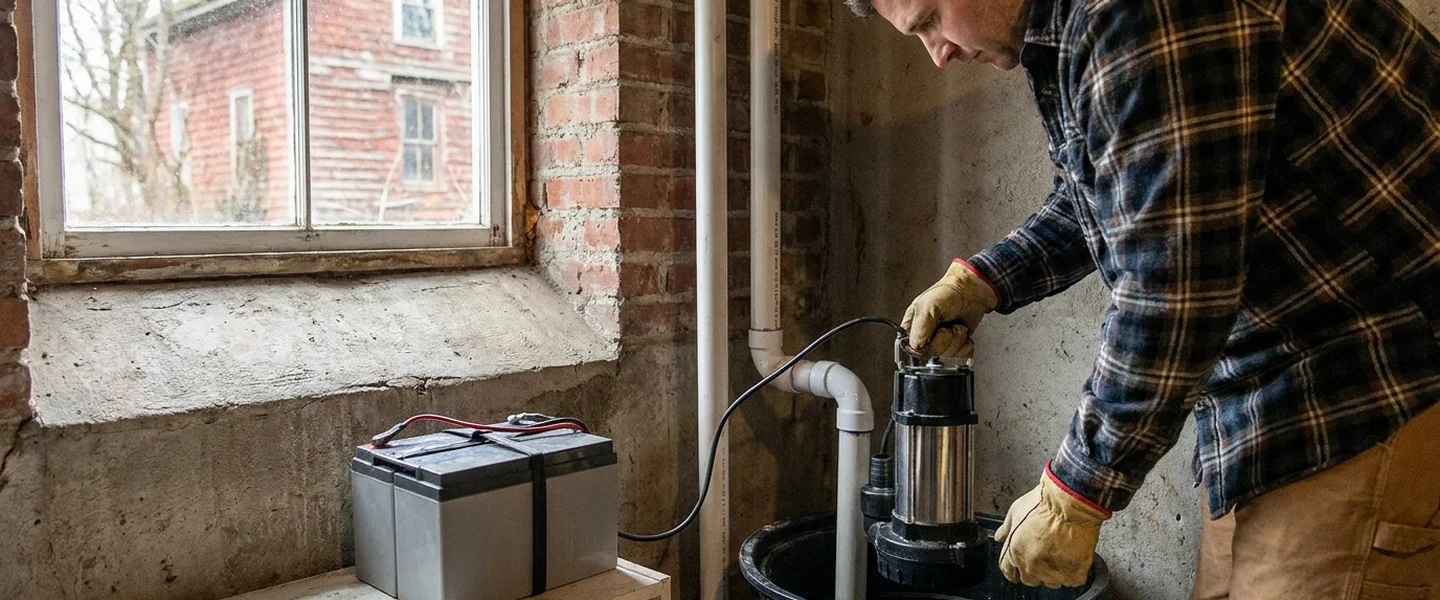
A sump pump is the last line of defense between groundwater and your finished basement, and in the Richmond area — where summer thunderstorms regularly drop two to four inches in an afternoon — it needs to be sized right, installed in a proper pit, and backed up so an outage during the storm does not flood you. Richmond Foundation Pros handles sump pump installation across the Richmond metro — including Henrico, Chesterfield, Glen Allen, Midlothian, Mechanicsville, Bon Air, Tuckahoe, and Short Pump. Every project starts with a free on-site inspection and a written estimate. Call (804) 885-2258.
What Sump Pump Installation Means in the Richmond Area
Foundation work in central Virginia is a soil-and-water problem before it is a structural problem. The transitional band of soils where the Piedmont meets the Coastal Plain produces expansive red clay that swells in winter rain and shrinks in summer drought, plus localized groundwater near the James River that pushes hydrostatic load against basement walls during every heavy thunderstorm. Effective sump pump installation starts with diagnosing which of those conditions is actually driving your problem — then matching the repair to the cause.
That is why our process always starts with a 30-minute on-site inspection. We do not quote sump pump installation over the phone, and we will not write a number on a contract until we have looked at the soil, the existing foundation condition, the surrounding drainage, and any history the homeowner can share. The result is a quote that survives second-opinion review.
Project Details
| Typical timeline (estimate to start) | 3-5 business days for non-emergency projects |
|---|---|
| Install duration | 1-7 days depending on scope (single-crack repair to multi-pier underpinning) |
| Permit required | Yes for piering, egress, sump pit installs; varies for crack repair and bowing wall — we handle the paperwork |
| Crew size | 2-4 technicians plus project lead |
| Materials | See Materials We Use below |
| Warranty | See Warranty in Detail below — fully transferable |
| Pricing | Quoted per job after free on-site inspection — every quote is itemized in writing |
Our Process
Inspection and sizing
We look at basement square footage, drainage tile (existing or proposed), and historical groundwater patterns to size the pump correctly. Most Richmond basements need 1/3 to 1/2 HP.
Pit location and discharge planning
Sump pit located at the low point of the basement floor. Discharge line routed up and outside, terminating at least 10 feet from the foundation, ideally to a pop-up emitter at a downslope point.
Concrete cut and pit set
Saw-cut the concrete, dig the pit, set a 24″ perforated pit liner on washed stone. Connect to existing drainage tile if present, or to the new interior French drain we just installed.
Primary pump install
Cast-iron Zoeller M53 or Wayne CDU800 primary pump on a check valve. Discharge plumbed in 1.5″ PVC.
Battery backup install
Secondary battery-backup pump (Pro Series or Basement Watchdog) wired to a sealed AGM battery, with a 12-hour alarm panel. The backup runs even with the power out.
Test and document
Bucket-test both pumps, verify discharge runs free, confirm alarm sounds. Written warranty + recommended annual service schedule.
Materials We Use
| Material | Spec | Why we use it |
|---|---|---|
| Zoeller M53 primary pump | 1/3 HP cast iron | Workhorse primary; rated for 43 GPM at 10′ head — handles a heavy Richmond thunderstorm. |
| Pro Series PHCC-2400 backup | Battery backup | Secondary pump with sealed AGM battery and 12-hour alarm panel. |
| Sump pit liner | Hydromatic FPC24 | 24″ x 22″ perforated polyethylene basin set in washed stone. |
| Check valve + discharge | 1.5″ PVC | Spring-loaded check valve directly above pump prevents backflow into the pit. |
Brand selection matters in this trade. Off-brand piers, off-brand pumps, off-brand carbon fiber all have the same problem: they save 10-15% on materials and lose 5-10 years on durability. The brand list above is what we install on our own homes.
Common Scenarios We See
Storm-driven basement flood
The classic Richmond June or August scenario: 3-4 inches of rain in 90 minutes, the sump pump trips on its 15A breaker or runs the battery dead, and the finished basement takes water across half the floor. The fix is a properly sized primary pump on its own circuit, a sealed-AGM battery backup, and an audible alarm panel.
Stair-step crack in brick veneer
Almost always a sign of differential settlement at an exterior corner — usually the corner with the gutter that nobody cleaned in 5 years. We diagnose by shooting elevations inside, mapping the settlement direction, and recommending push piers at the affected corner if the differential is over 1″.
Bowed basement wall along the back
Soil pressure from the high side of a graded lot, plus saturated red clay during a wet winter, plus 1960s 8″ block construction with no horizontal rebar. The fix is carbon-fiber strapping when deflection is under 2″, wall anchors when it is over 2″. Either way, no full excavation.
Why Richmond Homes Need This
Three regional realities make sump pump installation more common in central Virginia than the national average. First, the expansive red clay across Henrico, Chesterfield, and most of Hanover County moves seasonally — swelling in winter, shrinking in summer drought — and that movement transfers directly into foundations that were not built with the lateral reinforcement modern code requires. Second, the James River basin water table sits high enough that any heavy thunderstorm raises hydrostatic pressure against basement walls within hours. Third, the housing stock in older areas (Tuckahoe, Bon Air, parts of Henrico) was built before modern footing-drain requirements, so groundwater that should have been intercepted at the footing has nowhere to go except into the basement.
Those three pressures are why sump pump installation is the most-searched home improvement category in the Richmond metro after roofing — and why the local contractors who understand the geology consistently produce repairs that last longer than what franchise-style operators install with the same materials.
Warranty in Detail
We publish exactly what is covered and what is not. The honesty makes franchise warranty paperwork — which often hides 14 exclusion clauses behind 2 marketing claims — look exactly as evasive as it is.
What’s covered
- Lifetime manufacturer product warranty on ECP steel push piers and helical pier hardware
- 25-year workmanship warranty on push-pier and helical-pier installation
- Lifetime workmanship warranty on basement waterproofing drain tile
- Lifetime workmanship warranty on polyurethane and epoxy crack injection
- 3-5 year manufacturer warranty on primary sump pumps; 3-year on battery backup units
- Lifetime workmanship warranty on egress window installation against leak and structural movement at the cut
- Fortress Stabilization carbon-fiber 25-year manufacturer warranty against material failure
What’s NOT covered
- New foundation cracks that appear due to settlement or movement outside the original repair area (those are a separate condition and a separate engagement)
- Battery replacement on backup sump pumps after 3-5 years of service life
- Damage from owner-caused interference (cut drain tile during finish work, blocked pump discharge, etc.)
- Cosmetic finish work above the repair (drywall tape pops, paint touch-up) — these are foreseeable side effects of lift and are itemized in the original estimate
- Acts of God beyond warrantied scope (earthquake, sinkhole collapse, exterior excavation by another contractor that compromises the install)
Transferability
All warranties — manufacturer and workmanship — transfer to the next homeowner at closing without re-registration fees. The transferable paperwork is part of what supports your sale-time appraisal.
How We Quote (Without Quoting on the Phone)
Sump Pump Installation is not commodity work. Phone-quotes are how unscrupulous operators get a foot in the door and then revise the number upward after they have your signature. We do not work that way. Every Richmond-area quote is written after a free 30-minute on-site inspection, and the line items on the quote — materials, labor, permit cost, drying time, warranty — are exactly what appears on the contract.
The inspection itself is not a sales pitch. We walk the affected area, document conditions with photos, take measurements where relevant (elevation survey for piering, deflection for bowing wall, crack monitors for active cracks), and leave the property after 30-45 minutes. The written estimate arrives by email within 24 hours.
After the Install
The repair does not end the day the crew leaves. We follow up at three milestones to verify the install is performing.
- 30-day check — phone or text follow-up, confirm no issues, schedule any minor punch-list cleanup (drywall touch-up, grade restoration, etc.)
- 6-month check — for piering and bowing-wall work, re-measurement against pre-install baseline. Anything outside expected movement triggers a warranty service call.
- 12-month check — final warranty visit, written report documenting performance over a full freeze-thaw cycle. This report supports resale paperwork if you decide to sell within the next several years.
Frequently Asked Questions
How much does sump pump installation cost in Richmond?
Standalone sump pump installs (cut the floor, set the pit, plumb the discharge) are at the lower end of our pricing range; full perimeter waterproofing + sump systems are higher. We write every quote after the inspection. Call (804) 885-2258.
Do I really need a battery backup?
Yes, if you have any finished basement. Most major Richmond-area basement floods happen when a thunderstorm knocks out power AND drops 2+ inches of rain in an hour — exactly when the pump is needed most. A battery backup runs 6-12 hours on a sealed AGM battery.
Can you replace just the pump and use my existing pit?
Yes, as long as the existing pit liner is intact and properly sized. We inspect the pit at the visit; if it is too small or damaged, we recommend a pit replacement at the same time.
How loud is a sump pump?
A properly installed pump in a sealed pit is barely audible from the floor above. Most clients hear the discharge water moving outside before they hear the pump itself.
Where does the discharge water go?
Discharge line should terminate at least 10 feet from the foundation, ideally to a pop-up emitter at a downslope point. Discharge that pools at the foundation defeats the purpose of the pump.
How long does a pump install take?
A standalone pump replacement is a 2-3 hour job. A new pit install (cut concrete, dig, set pit, plumb) is a full day.
How long does the pump last?
Cast-iron primary pumps run 5-7 years under typical Richmond conditions. The battery backup pump itself runs 7-10 years, with the AGM battery needing replacement every 3-5 years.
Do you handle the discharge plumbing?
Yes. We plumb the full discharge line in 1.5″ PVC with a check valve directly above the pump, and we terminate the line at the appropriate distance from the foundation.
Will the new pump connect to my existing drain tile?
If there is existing perforated drain tile around the perimeter footing, we tie the pit directly into it. If there is not, the pit collects from the slab seam or from a new interior French drain — both work.
Is the install warrantied?
Yes — manufacturer warranty on the pumps (typically 3-5 years on primary, 3 years on backup) and our lifetime workmanship warranty on the install itself. Both transferable.
Service Areas for Sump Pump Installation
We provide sump pump installation across the full Richmond metro area:
Related Reading
Get a Free Written Foundation Quote in 24 Hours
Same-week appointments. No high-pressure sales. Every quote itemized in writing after a 30-minute on-site inspection.
What You Get in Our Quote vs. the Lowball Bid
We don’t compete on the lowest sticker price — we compete on the quote that gets the job actually done. Here is what is included in every quote we write, and the cut-corners that show up in cheaper bids.
Included in our written quote
- Engineer-style elevation + crack assessment
- Soil and drainage evaluation
- Written quote with pier counts + warranty terms
- Photo documentation of every crack/movement
- Permit-pulling where required
- Post-install elevation re-check
Cut corners in the lowball bid
- Free-quote with no actual inspection
- Pier-count guesses without measurements
- Subcontracted installation crews
- Warranties that exclude common failure modes
- Pressure to sign at the kitchen table
- Same-day pricing tricks